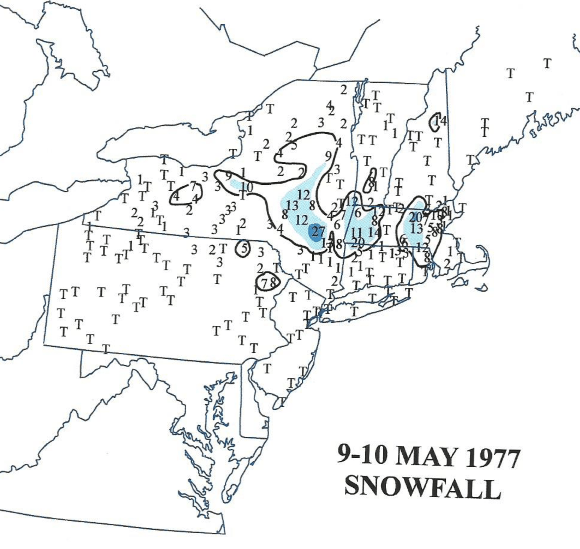
While this past weekend was wet and cool along the Jersey Shore (especially for early May), it was nothing compared to conditions associated with the latest snowfall I have seen in NJ. On May 9th-10th 1977, a winter like storm produced snow across a large section of the Northeast, including some incredible snowfall amounts over inland portions of New England. Though snowfall was scant across the Jersey Shore, I was amazed that snow could fall that late into spring near the coast.
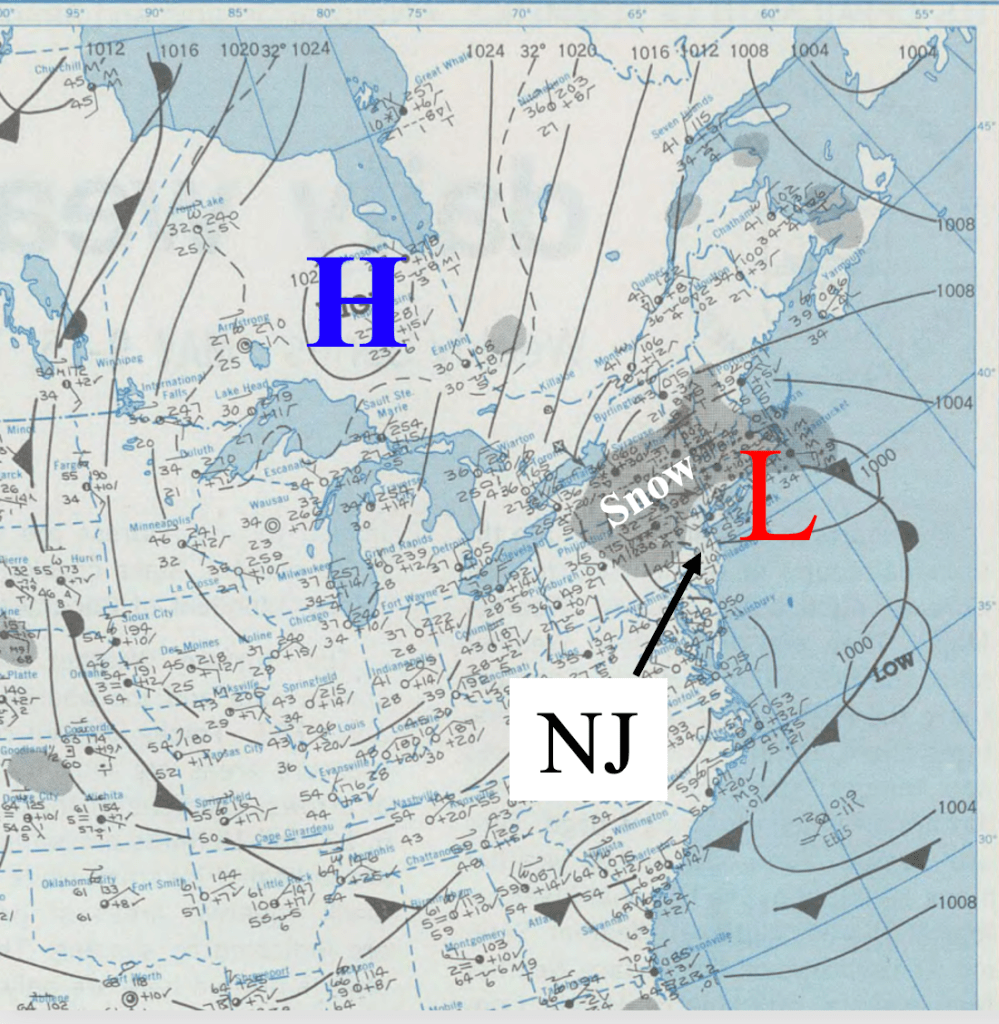
Figure 2 shows the surface map for May 9th, 1977. The position of the surface low off the NJ coast and the surface high over Ontario comprise a pattern that is conducive to heavy snowfall across the Jersey Shore, as other blog entries have chroniciled. At this time, temperatures near the coast were too warm for snow, but further inland across northwest NJ and northeast PA, locally heavy snowfall was occurring, as temperatures were just cold enough to support snow at the surface.
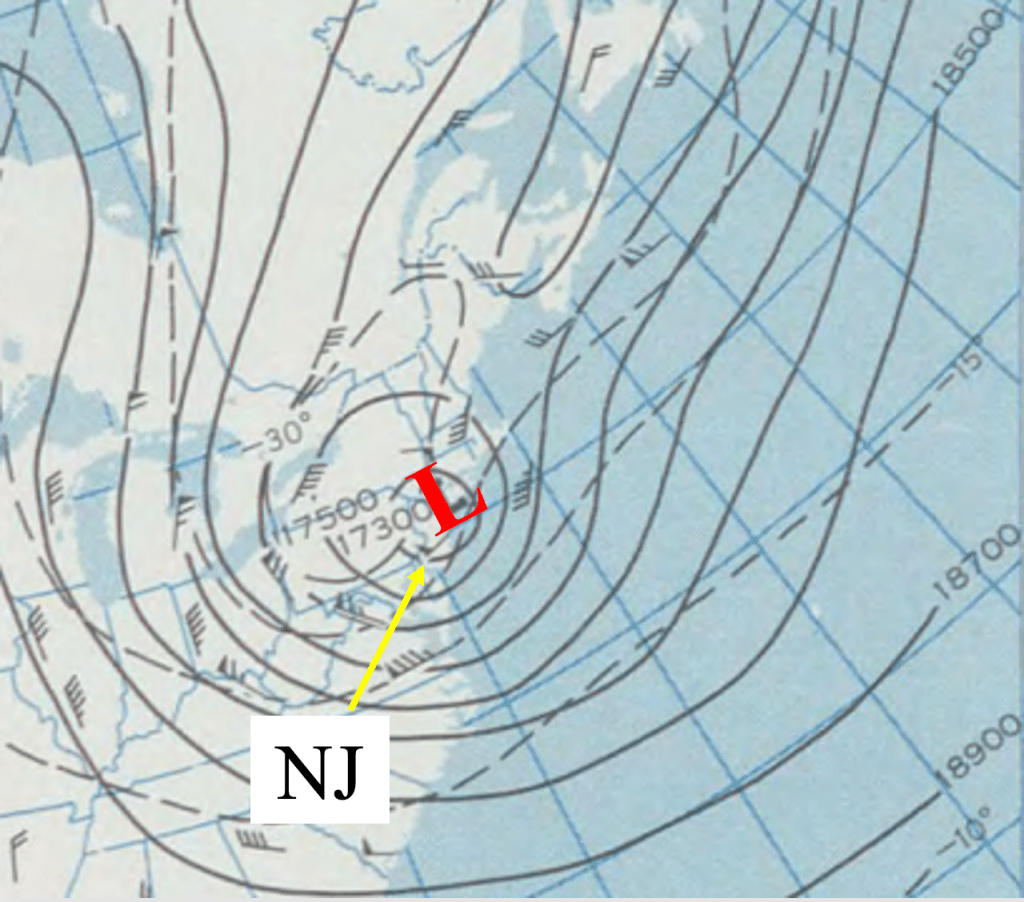
As the surface low moved offshore, the mid level low pressure system crossed NJ. Cold temperatures associated with the mid level low produced showers (of both rain and snow) across a large section of the area during the afternoon hours. In fact, if memory serves, we saw cumulus clouds not unlike those that produce heavy rain showers and small thunderstorms during the early and mid spring over coastal NJ. Rain showers arrived in Toms River, NJ around 4 PM, or about an hour before my Little League game was scheduled to start.
Much to my amazement, the rain changed to snow just about the time the game was supposed to have started. Seeing snowflakes in the air during May on the Jersey Shore blew my young mind, and cemented my future as a weather nerd. Though the ground was too warm for any snow accumulation, the snow fell for about 10 minutes, heavily at times, before changing back to rain before it ended. Since nobody expected anything like this to happen, my Little League was cancelled due to weather.
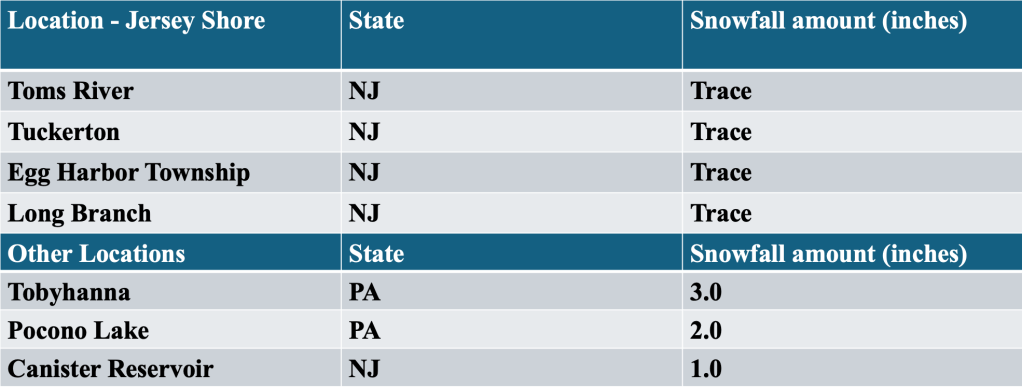
Table 1 shows selected snowfall amounts for the event. In case you were wondering, a trace of snow means that snow fell (no matter the duration), but did not accumulate on the ground. As mentioned earlier, the storm had a much more tangible impact further north, producing quite a blow to portions of inland New England (where location amounts of 24 inches were measured). Of course, it did not take much to cause a stir concerning snow in May on the Jersey Shore, but it did have a larger impact on me, as it fed my desire to one day be part of the system that monitored and predicted the weather.

 NJ Weather Info
Leave a comment