Overview
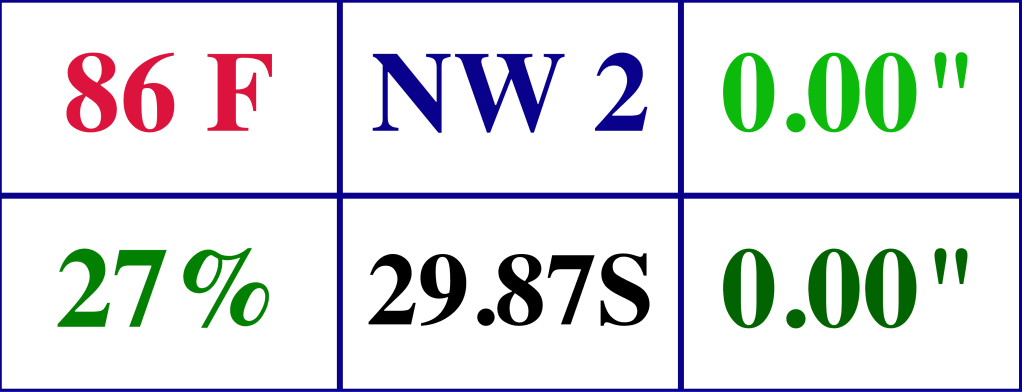
In the Bellcrest section of Toms River, NJ, the high temperature touched 90 degrees today (May 2nd 2024), as a front impinging from the northeast allowed offshore winds to keep the cooler ocean temperatures at bay. Given our first taste of summer, it would be hard to imagine that the last freezing temperatures in the history of our station actually occurred almost three weeks later, in 1992! As residents of the Jersey Shore are well aware, warm temperatures can be quickly followed by cold temperatures in the spring and vice versa, as the migrating jet stream delivers both before it moves north of the region for the warmer months.
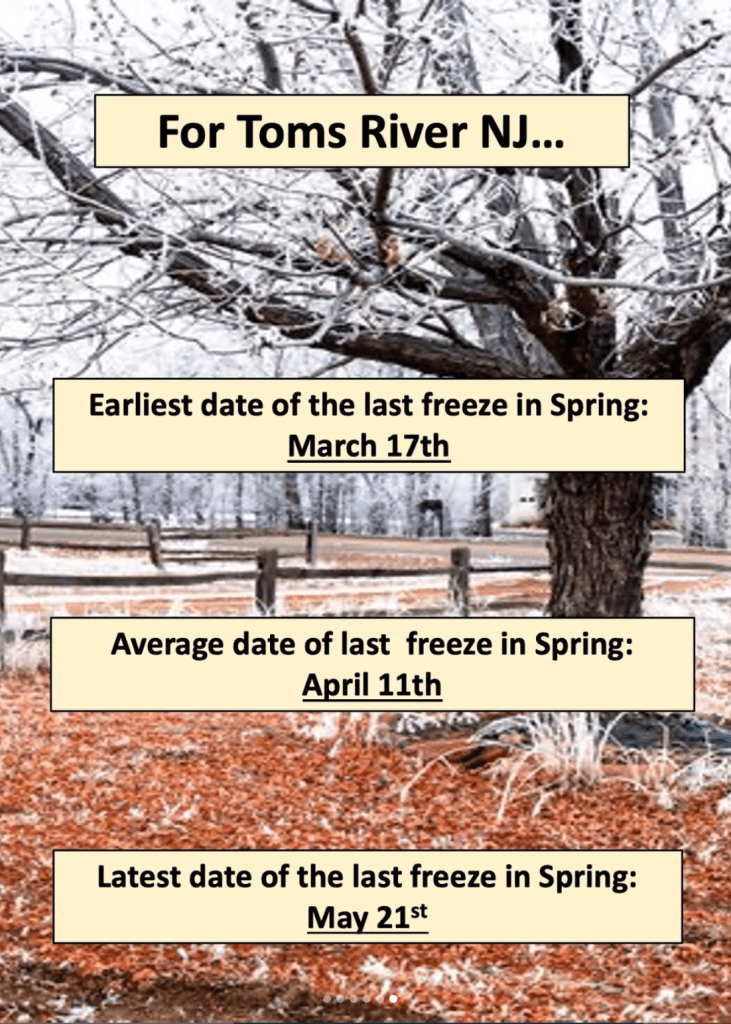
On average, the last freezing temperatures of the spring in the Bellcrest section of Toms River, NJ (when the low temperature drops to 32 degrees or lower for the last time) occurs on April 11th. However, there is quite a bit of spread concerning when the last freeze occurs. Since 1989 (when daily temperature records stabilized at our station), the date of the last freeze has varied considerably, with most dates falling between April 1st and April 17th. Most times, the weather forecasts are fairly accurate with respect to frost and freezes, and headlines are generally issued anywhere from 12 to 36 hours before the freeze is expected to happen.
Factors Determining the Timing of the Last Freeze of the Spring
Many factors work together to determine the last freeze of spring. First is the overall weather pattern. A warmer late winter/early spring occasionally allows the last freeze of the spring to occur in March. At our location, the earliest last freeze of the spring technically occurred in late winter, on March 17th, 2010, during a warm late winter/spring pattern. During the next few months, many daily record high temperatures were set as the warm spring evolved into a hot summer.
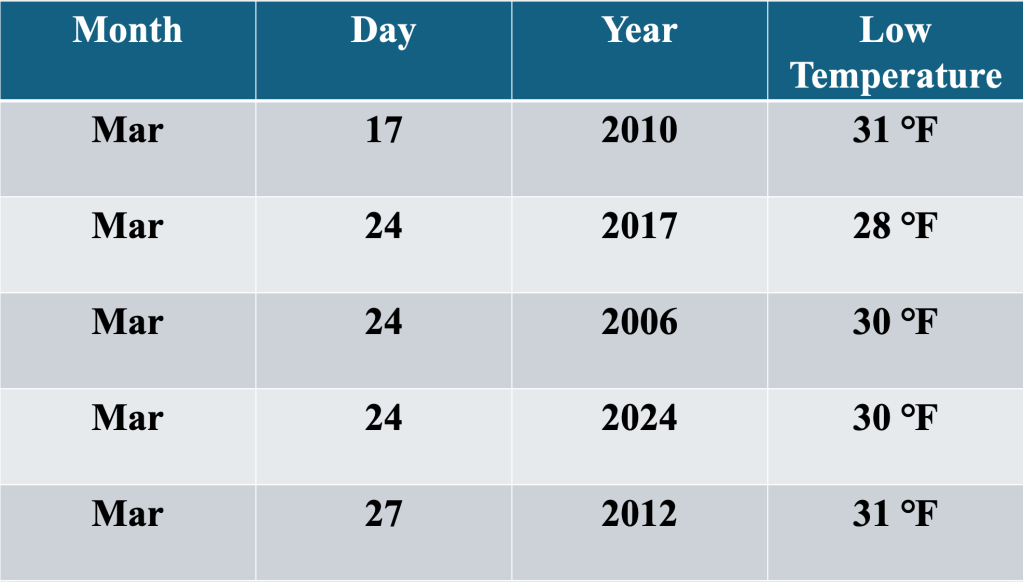
Conversely, a cold late winter/early spring pattern can delay the last freeze of the spring well into April. In fact, three of the last freezes occurred in late April, with temperatures dropping into the upper 20s and lower 30s. In each of these cases, cold spring conditions spread from March into April, delaying the beginning of the growing season until May.
Important – It should be noted that the dates above were derived for a single location along the Jersey Shore. Near the beach, the last freeze typically occurs before these dates, and further west it can be even later and stretch well into May. Unlike high temperatures, which are generally controlled by the overall weather patten, low temperatures can be influenced as much by the composition of the soil, protected from the wind, and away from larger bodies of water (such as a small lake) as the larger scale weather pattern.
There are times when the atmosphere suggests low temperatures could approach the freezing mark, but it is uncertain just how much area would be affected by the freeze. Much of the soil along the Jersey Shore (especially east of the Garden State Parkway) is composed of porous sand (which can resemble beach sand in places). During the spring, sandy soil is very effective at collecting heat, which explains why locations in the Pine Barrens of NJ tend to warm more quickly than neighboring areas.
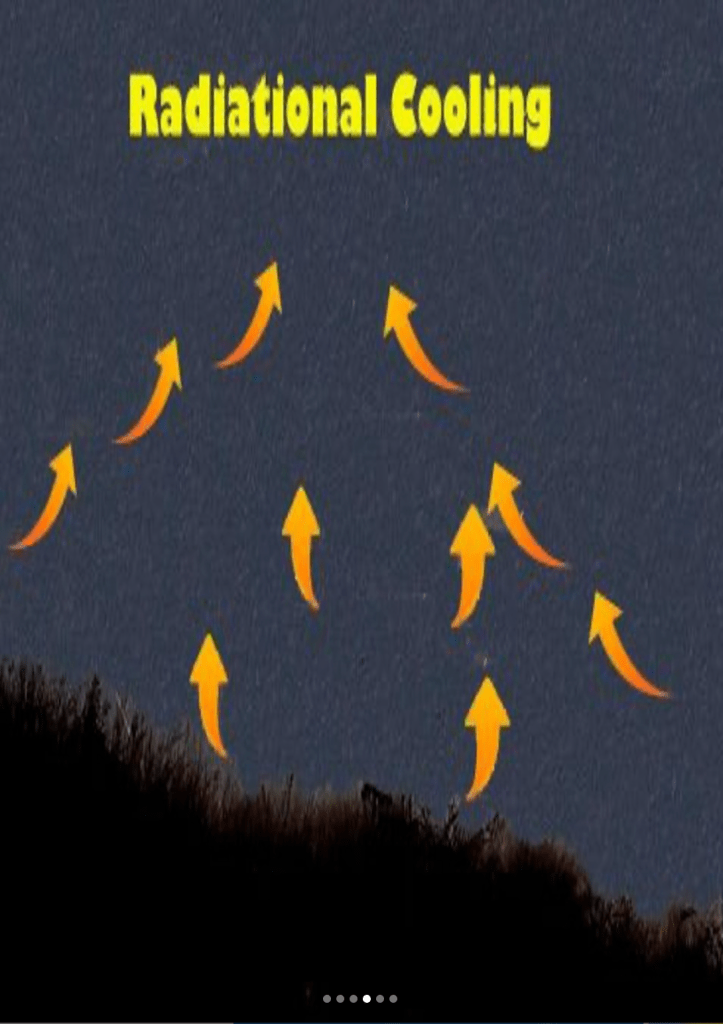
At night, the sandy soil releases the heat just as quickly. Clear skies and light winds allow the transfer of heat from the sandy soil to the atmosphere much more efficient, allowing temperatures in protected locations to plummet during the evening hours. Known as radiation cooling, the process can result in favored locations being several degrees colder than others short distances away, complicating a freeze forecast. Most of these colder spots are often well known by those who live near them, allowing them some measure of protection when temperatures drop during the spring.
Why are freezing temperatures bad for some plants along the Jersey Shore?
Along the Jersey Shore, most indigenous plants and trees possess some tolerance for freezing temperatures, as they occur each year. Once these plans/trees reach a certain point in their development, they become more susceptible to freezing temperatures (which usually happens about the time of the last freeze each year). While hardier plants/trees can suffer damage from late freezes, they are often able to regrow damaged portions of the plant (such as leaves). If the freeze occurs late enough into the growing season, the damage could limit the ability of the gardier plants to recover.
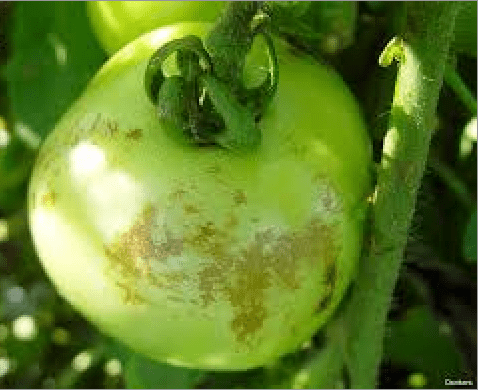
More delicate flowering plants are generally much more sensitive to the cold, and even a short freeze can cause catastrophic damage. Unlike any other ubiquitous substances common found in nature, water becomes less dense as it cools, forming a lattice structure when the ambient temperature reaches 32 F (0 C). The forming lattice structure inside the cells of more delicate plants can cause significant damage, often tearing cells and killing the plant itself. Along the Jersey Shore, tomatoes fit into this category, as they often suffer damage when an unanticipated freeze happens before mitigating actions can be applied.
May 21st 1992 – the Latest Last Freeze in Toms River, NJ
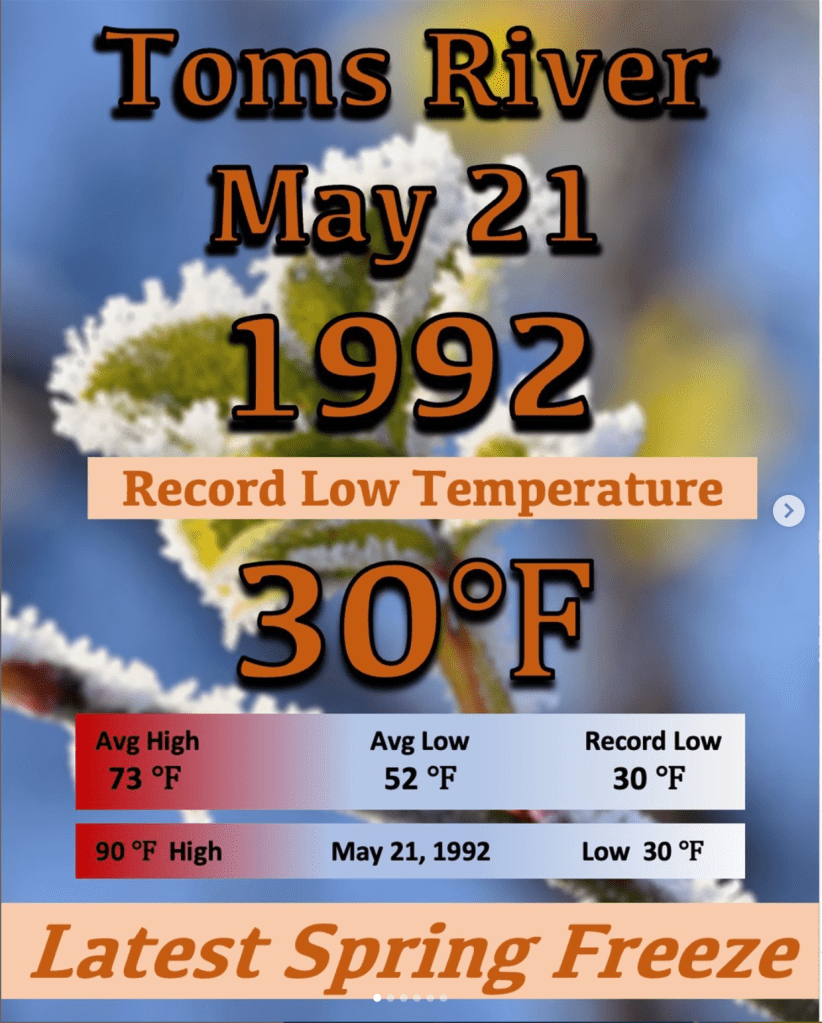
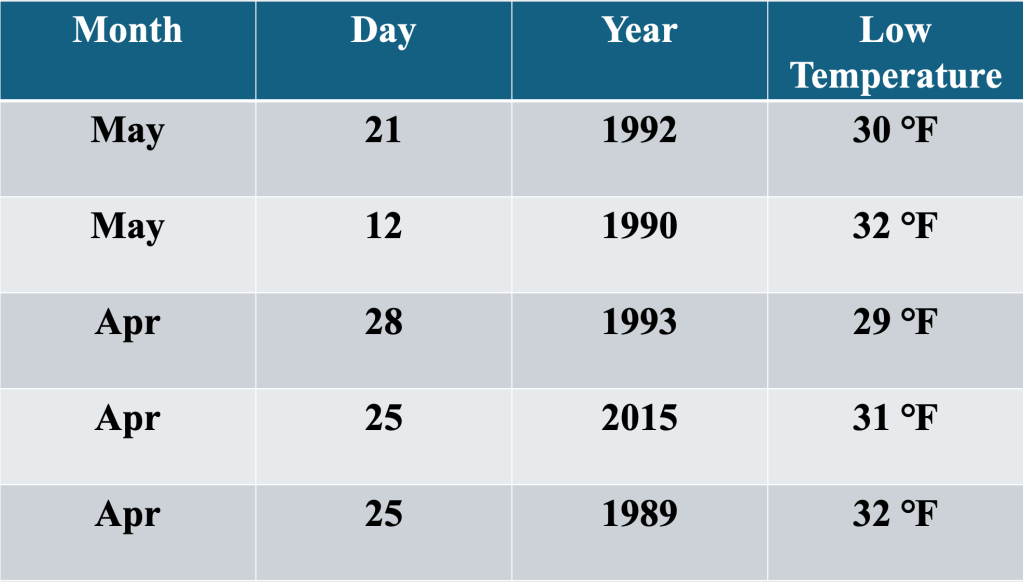
A prime example of the damage potential associated with a very late freeze occurred on May 21st, 1992 across much of southern NJ. During the early morning hours, a damaging freeze occurred across much this area, wreaking havoc on developing crops (particularly tomatoes). Low temperatures that morning (away from the water) dropped into the upper 20s and lower 30s, causing damage to largely unprotected plants. The low temperature in the Bellcrest section of Toms River, NJ dropped to 30 degrees, setting a record low for the date.
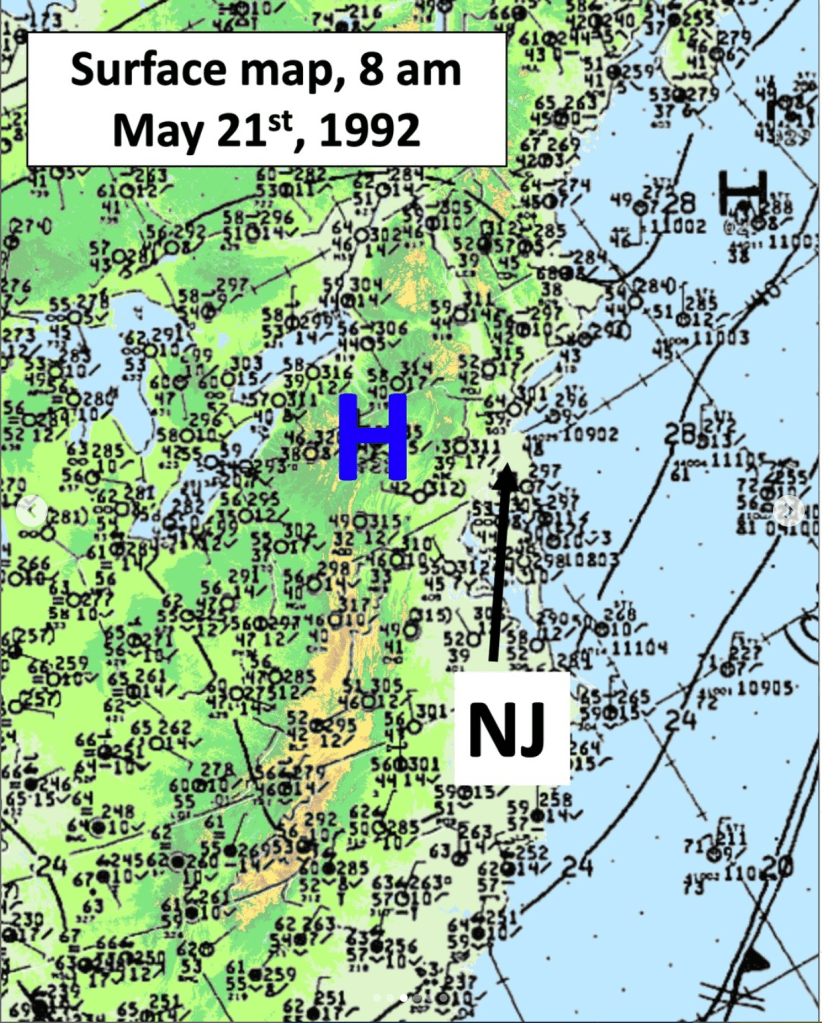
The coldest temperatures that morning occurred in the Pine Barrens, a large area of sandy, acidic soil in which seemingly only the pitch pine can thrive. The sand in the Pine Barrens allows heat accumulated during the day to exit quickly during the evening, resulting in colder temperatures than nearby locations. On the evening on May 20th, 1992, high pressure over eastern PA produced clear skies and slackening winds. The combination of clear skies and light winds resulted in radiational cooling (when clear skies and light winds allow the heat of the day to escape more quickly than usual), allowing temperatures to plummet during the evening hours.
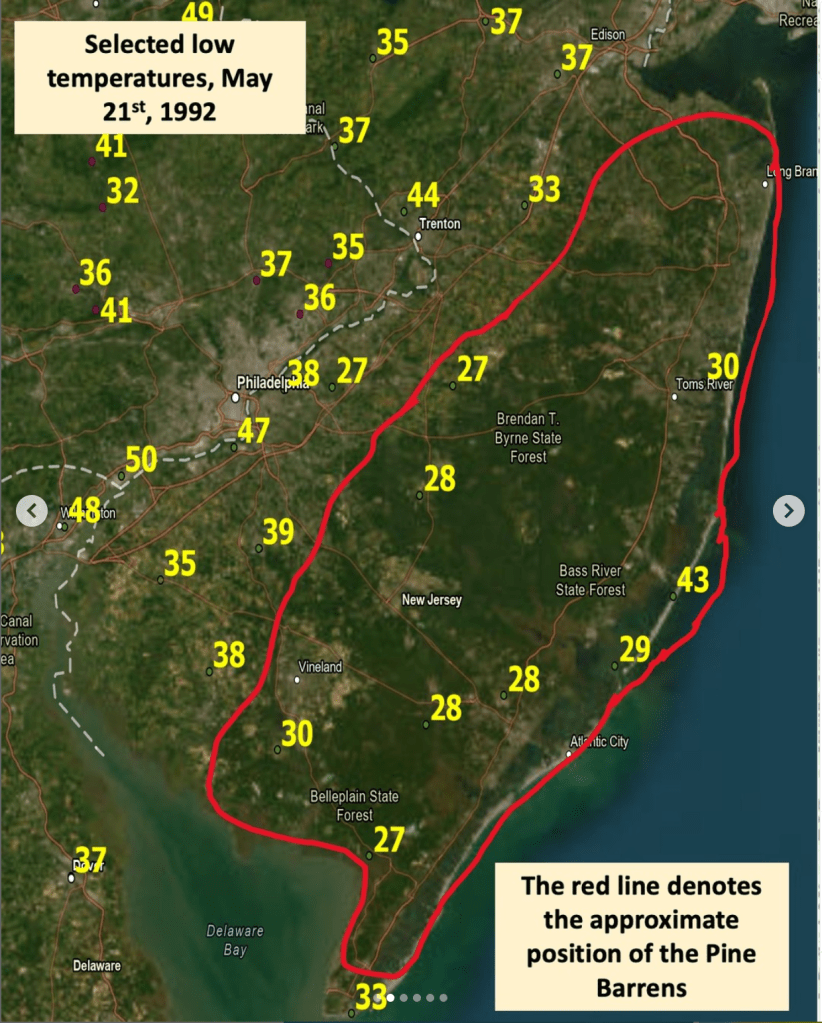
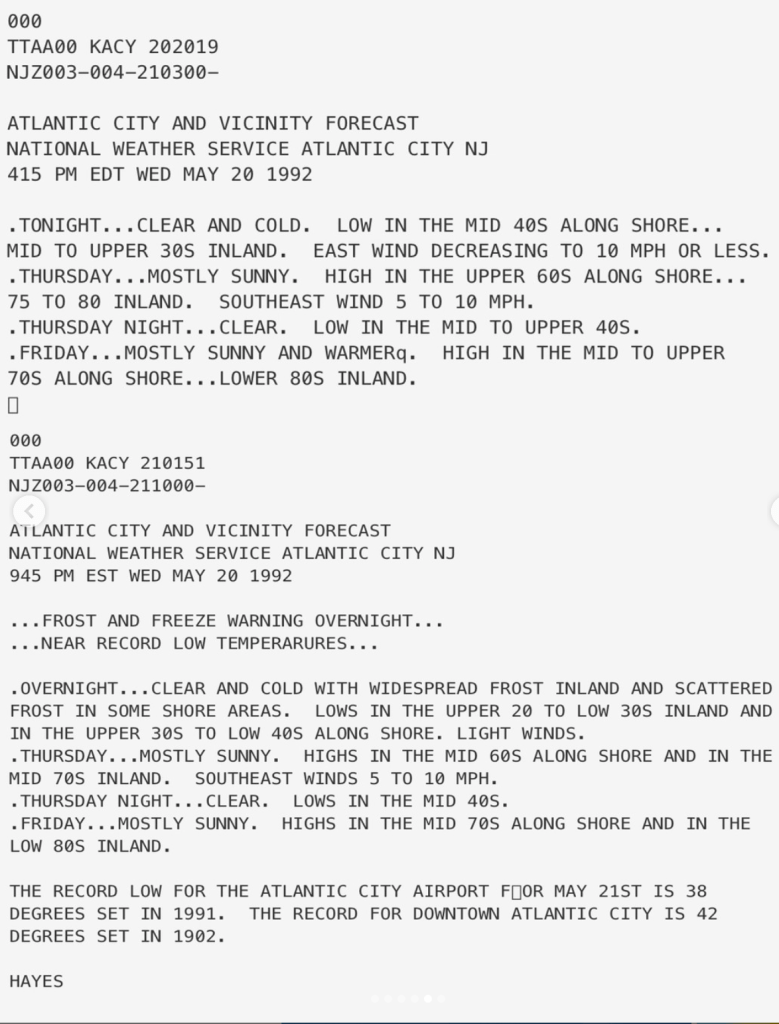
The initial forecast for that night indicated cold readings in the Pine Barrens but did not mention freezing temperatures. However, it became clear during the evening that the radiational cooling was causing temperatures to drop more quickly than expected, and the forecast was updated later that evening to reflect the potential for a freeze. However, by that time, protecting the tender vegetation under the cover of night was problematic, and significant crop losses occurred. Late warning of the potential for freezing temperatures was roundly criticized by the agricultural community.
Just how unusual is a freeze in late May? For the Bellcrest section of Toms River, the average date of the last freeze in the spring is April 11th, nearly six weeks before this event. Based on the available freeze data for our station, this freeze (and the second latest freeze, which occurred May 12, 1990) were both statistical outliers, which often defy easy explanation. From this context, though, it seems as though the growing of delicate outdoor flowering plants could be problematic along the Jersey Shore until some time in May.
 NJ Weather Info
Leave a comment