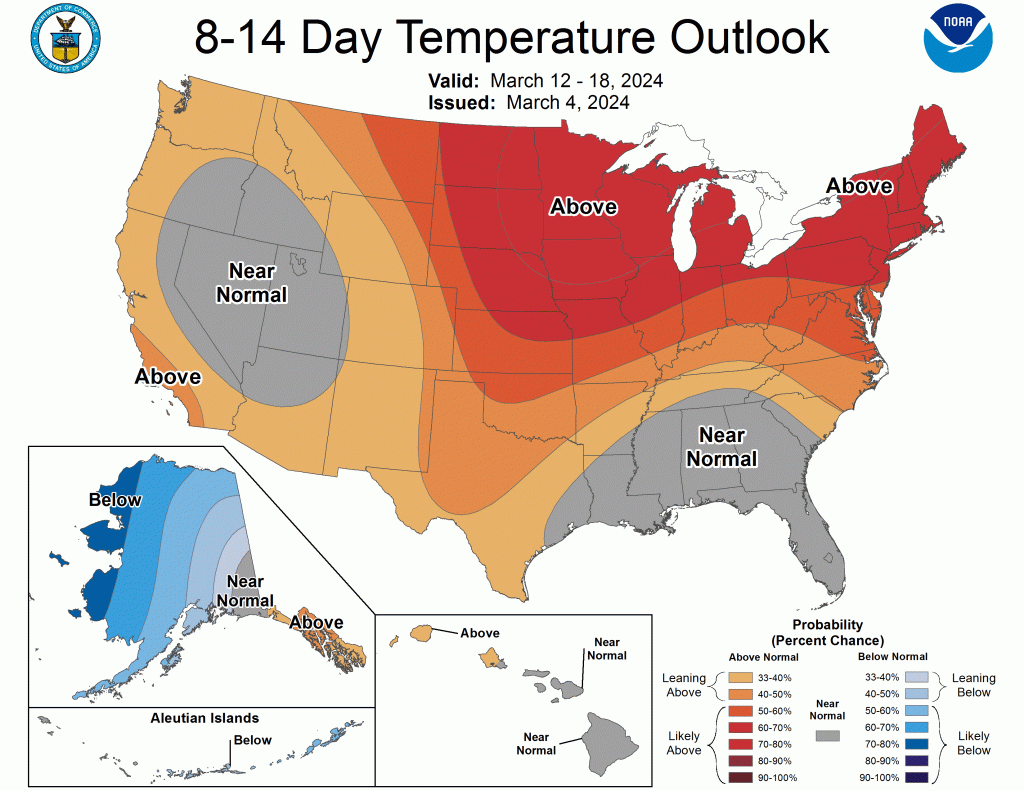
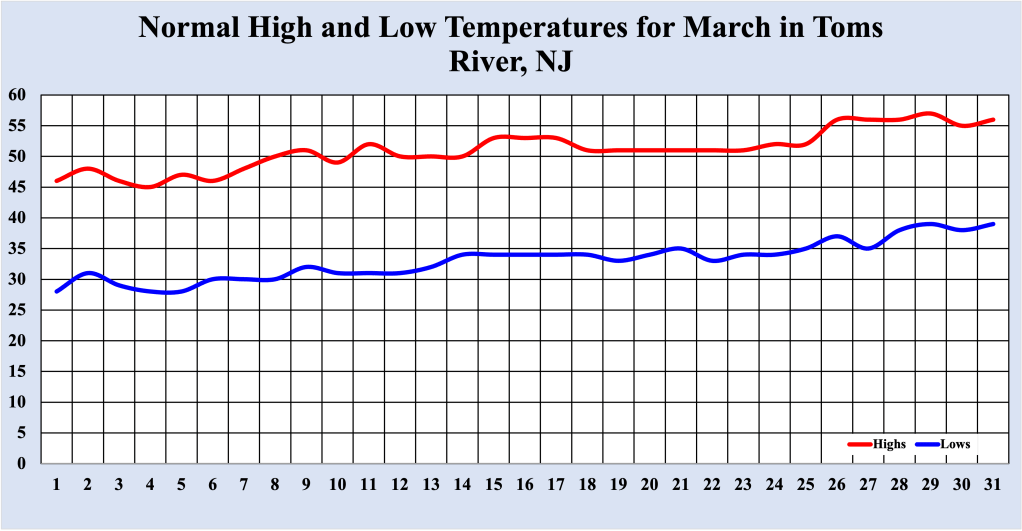
Despite the warmer temperatures over the last couple of days, and the forecast of above normal temperatures into the middle of March 2024, it can still snow along the Jersey Shore during March. Of course, the time of year becomes more detrimental to snowfall during the month. Normal high temperatures during March range from mid 40s in the early portion of the month to the mid 50s by the close. Accumulating snow generally needs air temperatures close to the freezing mark, so for snow to accumulate, temperatures would need to be 15 to 25 degrees colder than normal. Given the increasing sun angle, this is a tall order along the Jersey Shore.
A Brief Overview of Snow in March along the Jersey Shore
Though we do not measure snow at out station in the Bellcrest section of Toms River (due to logistical concerns), they are nearby stations from which we can construct a climatology of snowfall for the Jersey Shore during March. Data between 1950 and 2014 was readily available for analysis, and these data were used to produce some characteristics of March snow along the NJ Shore.
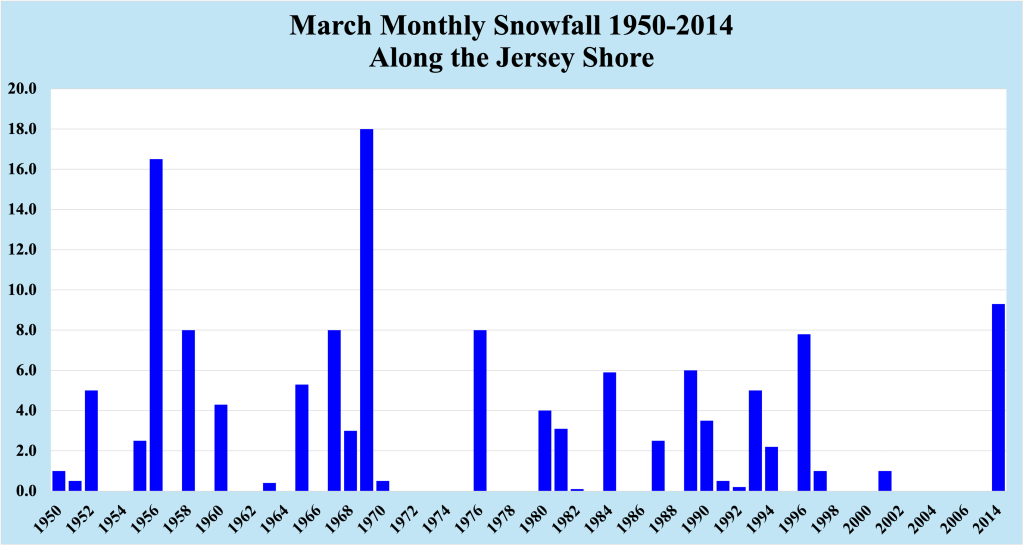
Of the 59 Marches included in the data set, 28 of those months had no accumulating snow during the month, meaning that accumulating snow occurs roughly every other year on the Jersey Shore. However, snowfall can be a tricky entity to quantify, as the term average snowfall can have little meaning in places (like the Jersey Shore) where snow is an infrequent event. March along the NJ shore averages about 2.5 inches of snow , but 2.5 inches of snow does NOT fall every March.
Winter Storms in March along the Jersey Shore
Figure 3 shows the total snowfall for March by year along the Jersey Shore. Note the large differences in snowfall amounts from year to year, as well as the number of Marches when no snow accumulation was recorded. Typically, years with larger snowfall amounts in March are associated with low pressure systems reminiscent of winter, rather than spring. A developing winter storm can produce accumulating snow across the Jersey Shore during March. With a strong dome of high pressure over New England funneling cold air southward, a strengthening storm could overcome the normal warming during March to produce snow.
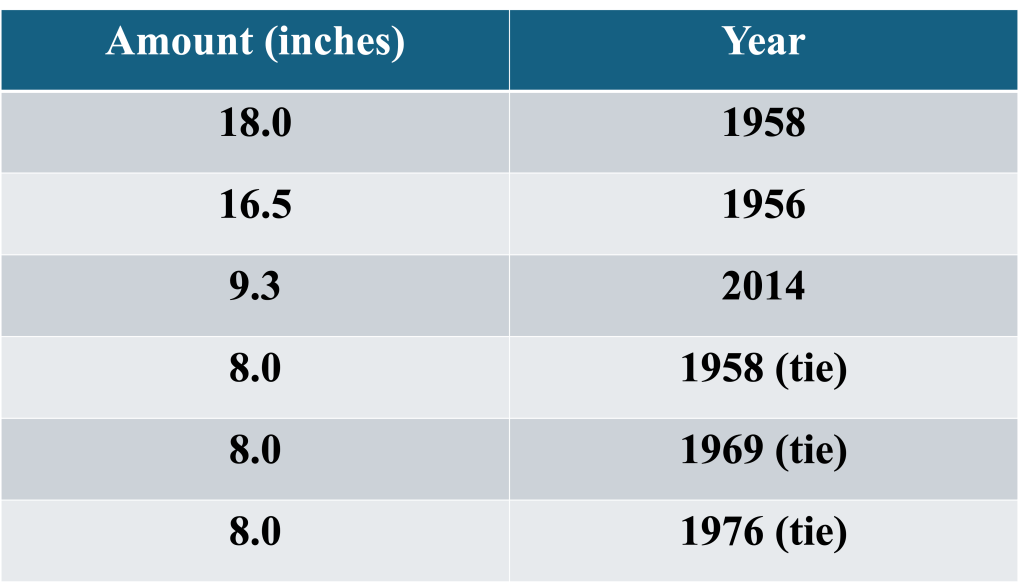
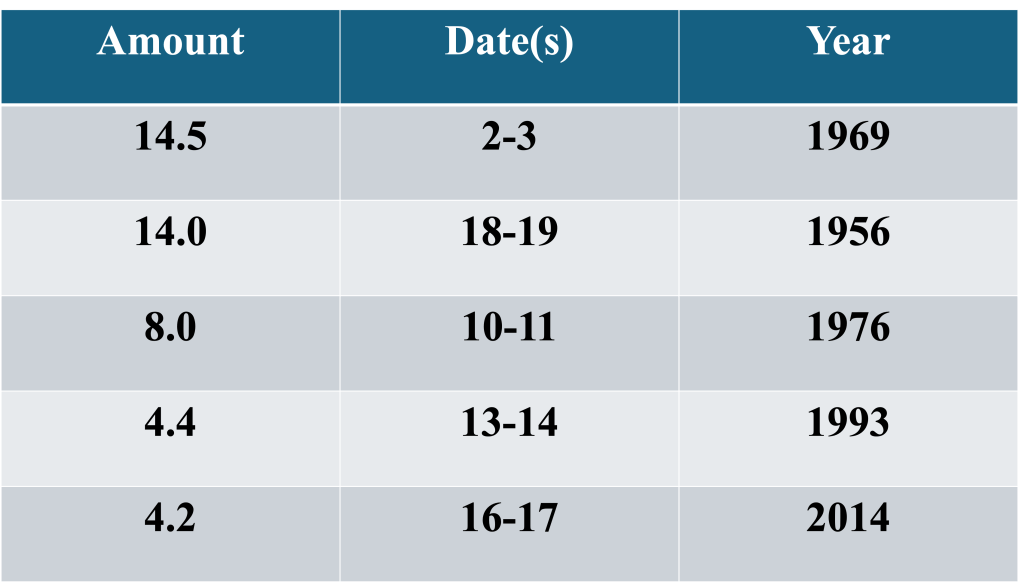
For example, the greatest 2-day snowfall in March along the Jersey Shore occurred on March 2-3 1969. A strongly developed surface low off the mid Atlantic coast spilled moisture back across NJ as strong high pressure over Quebec and northern New England supplied enough cold air to keep temperatures close to the freezing mark during the event. In Toms River NJ, 14.5 inches of snow was measured during this time (not at our location, but at a location closer to the NJ Parkway) before the storm moved away.
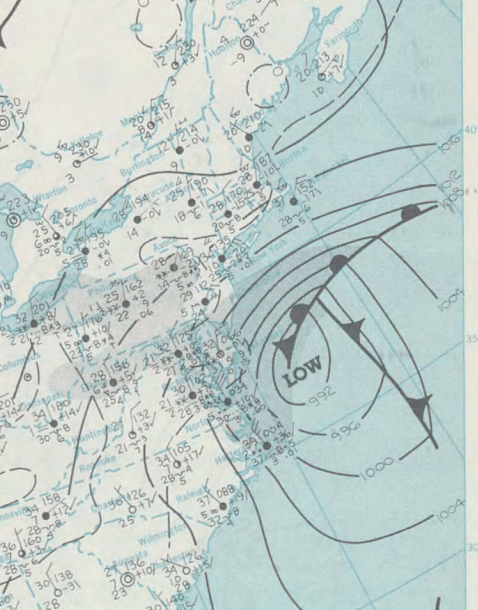
The second highest 2-day March snowfall along the NJ Shore occurred on March 18-19 1956. Much like the first event, a well developed low pressure system off the mid Atlantic coast produced an area of heavy snow along the coast. Both of these systems had characteristics of mid winter systems, and the fact that the calendar said March made no difference. If there is enough cold air in place, and the wind has a northerly component, snow can fall into April in the Bellcrest section of Toms River (as evidenced by the 2.3 inches of snow that fell during the overnight hours of April 19th and 20th in 1983).
Other snowfall in March along the Jersey Shore
Obviously, winter like storms in March are uncommon. Most March snowfalls along the NJ shore are much lighter, and many occur during the overnight hours. As temperatures climb during the month, snowfall during the daytime becomes increasingly difficult. During most situations (outside of winter storms), snow changes to rain as temperatures warm during the day, limiting the potential for snow accumulation. At night, when the atmosphere cools, temperatures can drop back toward freezing, allowing snow to survive to the surface and accumulate, particularly on colder surfaces.
There is one atmospheric process that allows snow to accumulate during the day in March. When rain falls into very dry air, the rain evaporates, meaning that the rain changes from a liquid to a vapor (or gas). Evaporation takes energy (in the form of heat) from the air to change the liquid to a vapor, leaving the air colder than before the rain started. As the process of evaporation continues, the airmass becomes colder, and eventually becomes saturated (meaning it cannot hold any more water at that temperature).
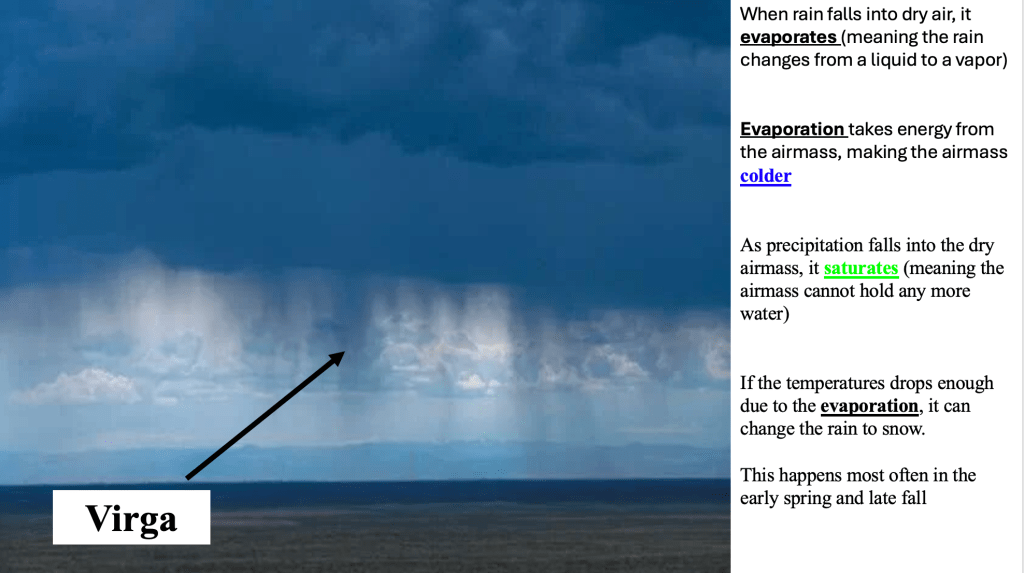
Typically, this process occurs in the early spring and late fall, though it can happen during much of the cool season. If the airmass cools sufficiently as it becomes saturated, the rain can change to snow, especially if the precipitation rate increases. In this scenario, while the precipitation is falling lightly, it tends to fall as rain. However, as the airmass becomes saturated, and the precipitation rates increases, the cooling from evaporation can change the rain to snow, as freezing air descends toward the surface.
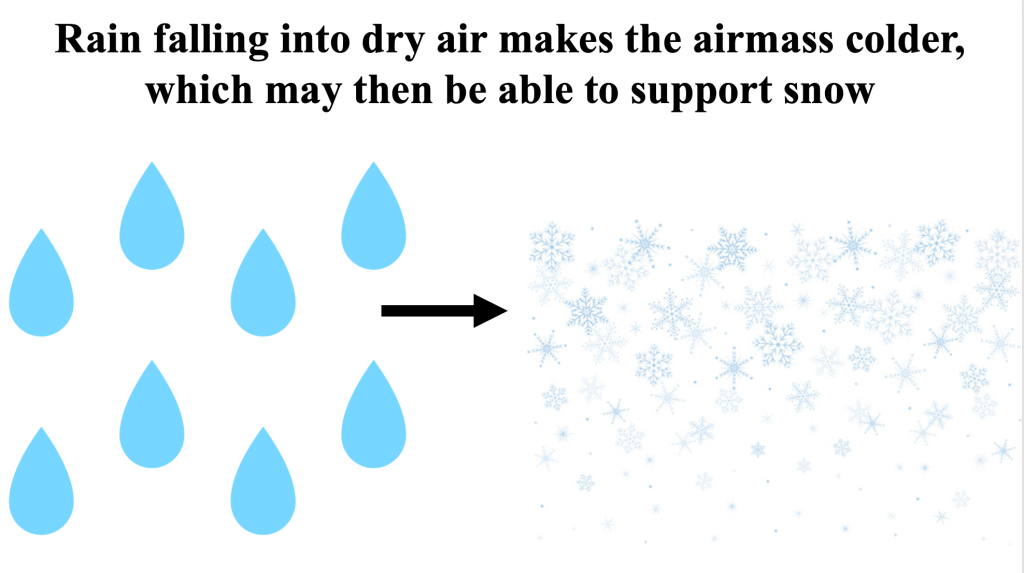
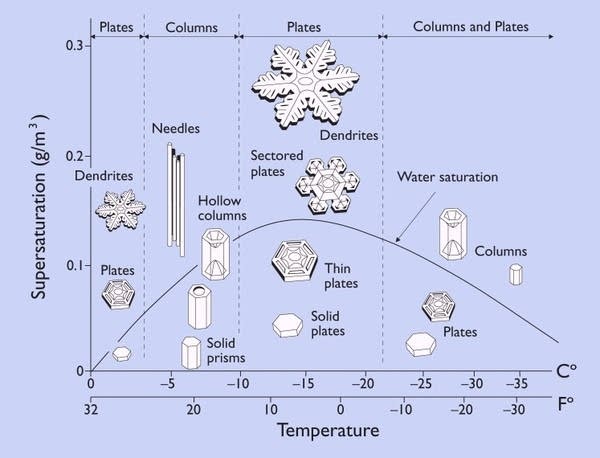
Once the airmass is saturated at near freezing temperatures, snowflakes drag colder air down with them, keeping temperatures from warming and allowing the snow to continue. Big snowflakes, referred to as dendrites, tend to fall when the airmass is saturated near freezing, allowing the snow to accumulate quickly. However, once the heaviest of the snowfall begins to dissipate, the larger snowflakes stop supplying cold air to the airmass, and the snow can and does change back to rain.
This process does not often last for long, so the amount of snow that can fall during the process is generally less than during winter storms. Along the Jersey Shore, most of the March snowfall occurs from this process (rather than than winter storms), which accounts for the large variations in March snowfall from year to year.
Review
Though most people along the Jersey Shore do not necessarily associate the month of March with snow (particularly when temperatures approximate spring like conditions), snow can and does fall during March. More Marches see accumulating snow than not, but most snowfalls are not heavy in nature. The highest snowfall totals are typically associated with winter like storms, and their occurrence is rare during March.
Most March snowfalls occur at night, when temperatures are cooler, but can happen during the day when evaporative cooling is present. These snowfalls are generally light (a couple of inches or less), and because of the increasing sun angle, accumulation usually do not last more than a day. Accumulating snowfall has occurred as late as March 31st, so winter is typically not completely over until that time.
 NJ Weather Info
Leave a comment