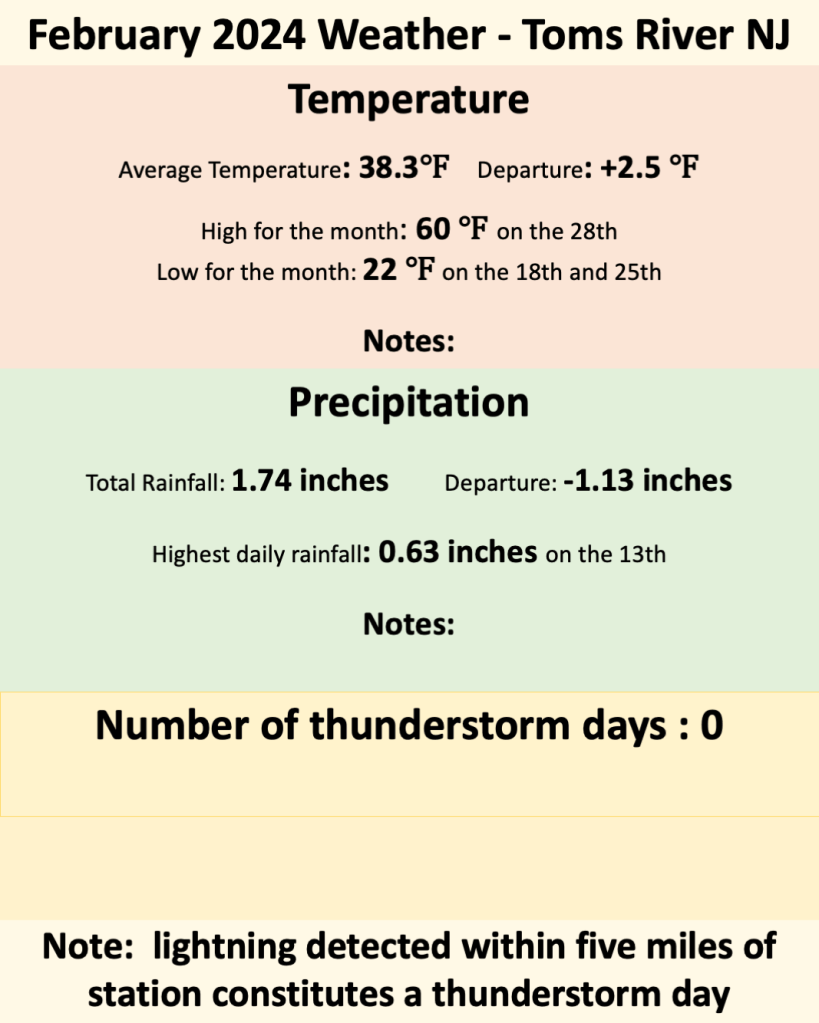
Temperatures
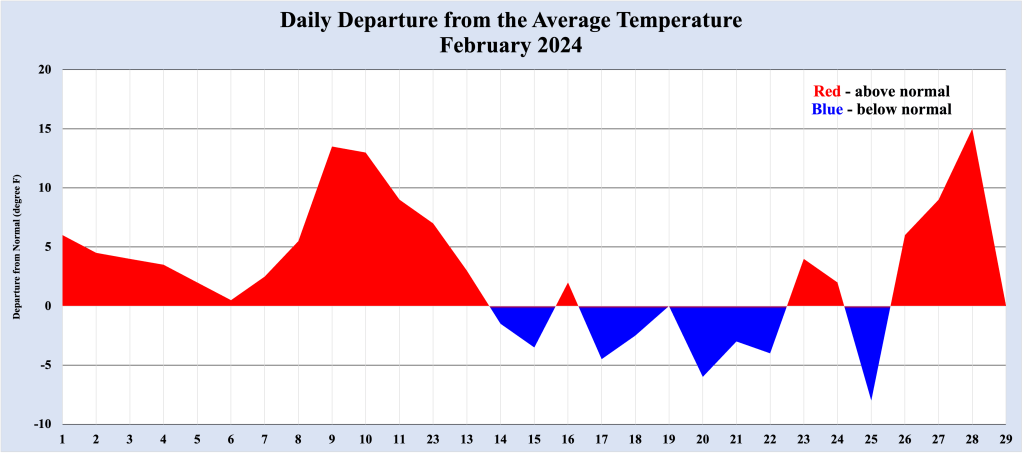
During the first 13 days of February 2024, temperatures in the Bellcrest section of Toms River, NJ averaged between 5 and 15 degrees above normal, with the warmest temperatures peaking around the 10th. These temperatures were a continuation of the warmth from late January, and it appeared as though Toms River might experience a record warm February. However, starting around St Valentine’s Day, the weather turned much colder, with the cold lasting through just about the end of the month. This stretch marked the coldest part of winter, something that might be expected during mid to late January.
Figure 1 shows the daily average temperature departure from normal for February 2024. Both ends of the month were very warm, with the coldest part spanning the middle. The warmer periods (shown in the red) were much more pronounced than the cooler periods (in blue), though the cooler temperatures dominated the middle portion of the month. Even with the swings in temperature during the month, no daily record high temperatures or daily record low temperatures were set.
Rainfall
Not surprisingly, February is the driest month of the year in the Bellcrest section of Toms River, NJ, as well as other locations along the Jersey Shore. By this time in the winter, cold temperatures displace the jet stream to the south of the region, meaning that low pressure systems generally only affect NJ with glancing blows. That having been said, three of the six largest two day snowfalls in Toms River occurred in February, but these type of events usually occur once a decade or so.
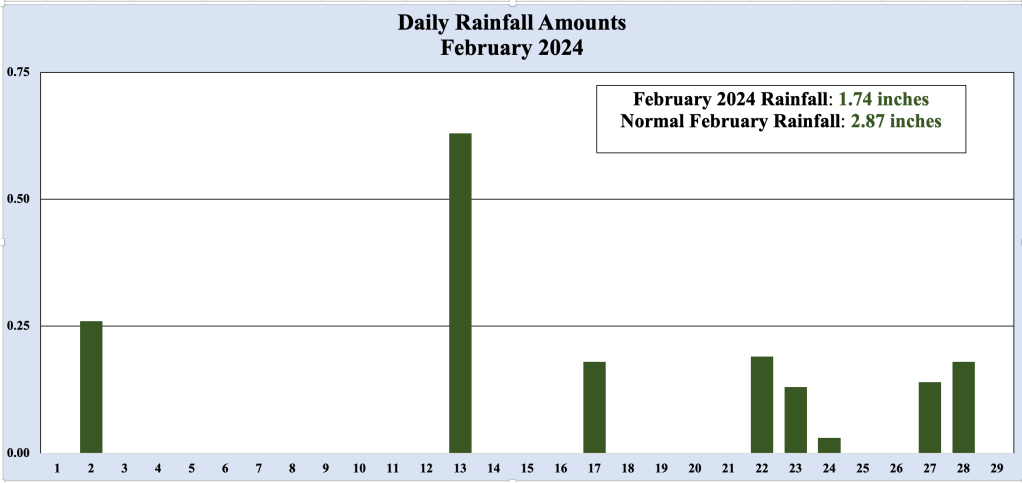
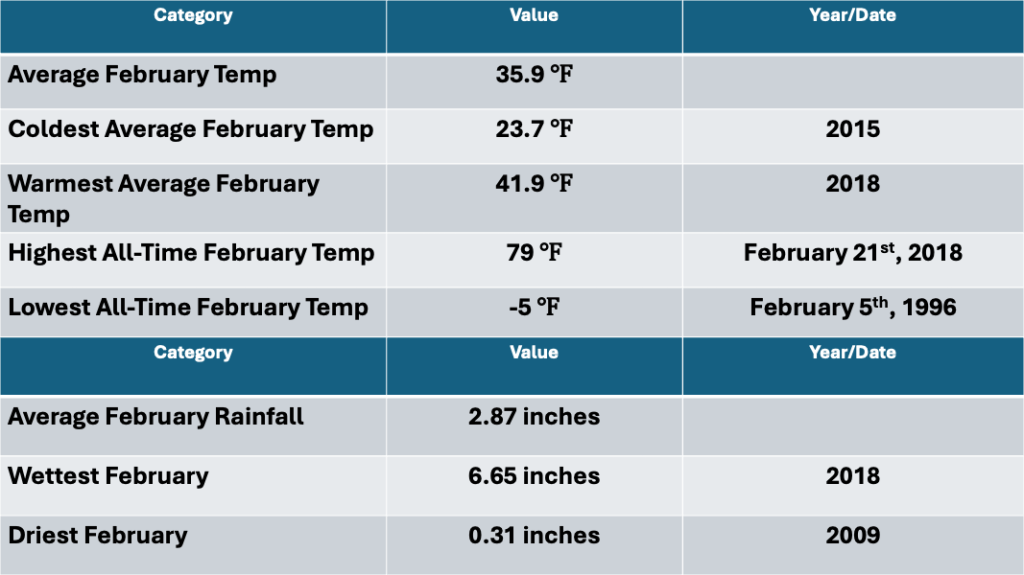
Through the middle of February 2024, only two precipitation events were recorded, and both events produced light to moderate rainfall events. At that time, it appeared as though this February could become one of the five driest Februarys at this location. (rainfall records date back to 1989). Subsequent light precipitation events (which included a measurable snowfall event along the Jersey Shore) pushed the monthly total above 1.50 inches. That number falls into the middle of the pack when it comes to February (when the average monthly rainfall is 2.87 inches). So while the month as a whole was drier than normal, it was nowhere near the driest February ever (which occurred in 2009, with a mere 0.31 inches of rain recorded that month).
Thunderstorms
Our Tempest Weather Station has an onboard lightning detector, which allows us to log lightning activity within 25 miles of the sensor. For our purposes, a thunderstorm day happens when lightning is detected within five miles of the station. Despite the warmer, roller coast like temperatures this February, our station did not log any thunderstorm days. In fact, our sensor has not detected a storm within five miles of the station since September 23rd, 2023.
Is it unusual for February to have thunderstorms? Unfortunately, we do not have a comprehensive source that tells us about the frequency of thunderstorms during the year. We did log a single thunderstorm day on February 21st, 2023, so obviously they can occur during the winter months. We are excited at the prospect to use the output from the lightning sensor to build our own thunderstorm climatology, but thus far the data sample has been far too small to draw any conclusions.
 NJ Weather Info
Leave a comment