Background
My brother and I have maintained weather stations in the Bellcrest section of NJ for more than 40 years. In the early years, our weather station consisted of store bought thermometers, sited as carefully as possible to minimize exposure to the sun. School and work often interrupted our ability to keep a vigilant weather watch, and from 1978 through 1986, record keeping was inconsistent. Since my main interest was winter weather, we managed to capture daily high and low temperature records during the winter months during this time.
Acquiring a CompuTech unit in 1989 effectively automated the temperature recording process, and during that year we purchased our first 8 inch rain gauge, so we added rainfall to the database. However, we did not measure snow, as we were not always present during snowstorms. Moving robbed us some data (which was apparently lost in the shuffle) in the mid 1990s, but our database became automated in 1997 with the procurement of our first Davis Instruments weather station. With the advent of the Davis Instruments station, our database has been virtually complete (except for a 10 day period around the time of SuperStorm Sandy in late October and early November 2012).
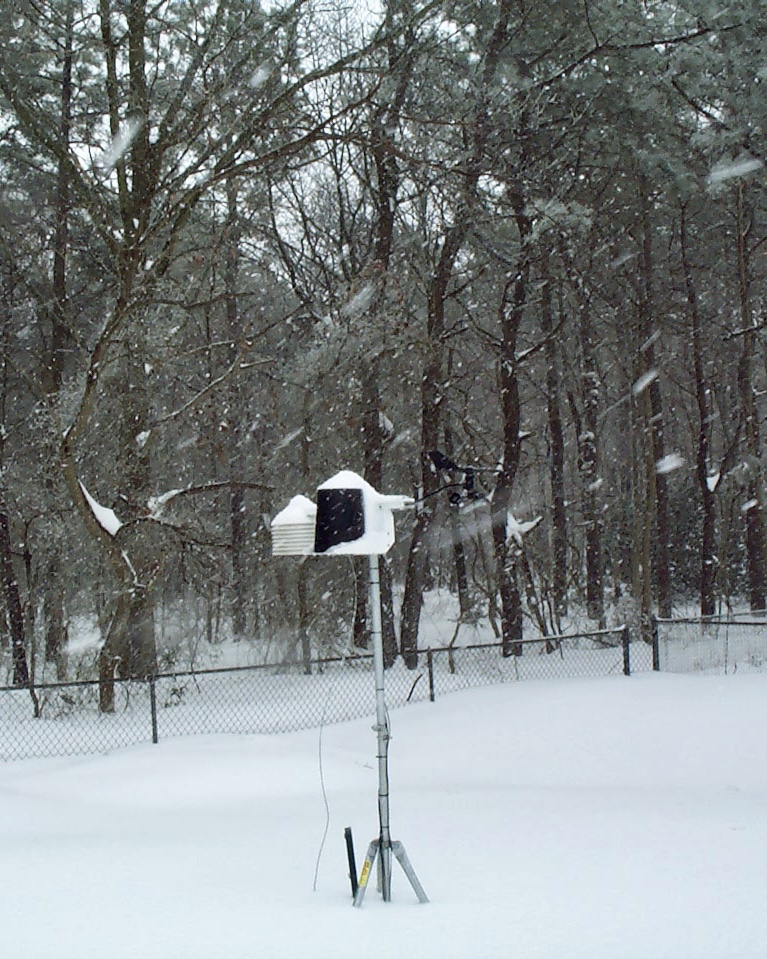
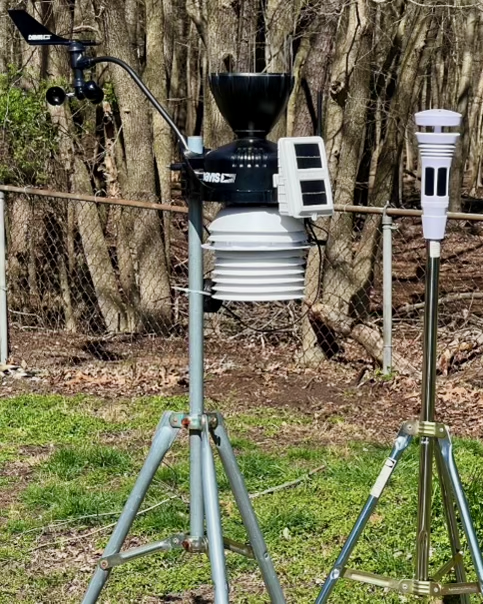
We still use the Davis Instruments equipment (currently we employ the Vantage Pro 2), but during 2022 my brother mentioned a weather station, produced by WeatherFlow, that was a self contained unit. The Tempest Weather Station offered wind readings with no moving parts and rainfall without a tipping bucket. Most intriguing to me was the lightning detector; I was not aware that the hardware for that task was cost effective enough to include in a relatively small station. The station was billed as low maintenance, with no user serviceable parts, powered by solar panels attached to an internal battery. Informal discussions with people using the Tempest along the East Coast all indicated that the Tempest was a solid weather station, especially for the price, but all said that the rain measurements were simply not very good. Since the price was modest (~ $300), we decided to take a chance and purchase the new system, if for no other reason than we might learn something new about remote weather monitoring.
Tempest Weather Station Installation
Our first Tempest was deployed in Toms River, NJ during mid December 2022, but almost immediately we discovered a problem with the connection between the station (the portion of the station in the yard) and the base station (located inside). Dropouts in communication between the two became more frequent with time, and before Christmas is was clear that we would need to return the station. We were not convinced that the problem was the base station (as it could have been an issue with onsite router), but we did not want to return the station to WeatherFlow, as there was verbiage in their return policy that stated if they determined the problem was NOT their responsibility, we would have been charged for the repair. Since it was within the return window of Amazon (where we purchased the station), we chose that avenue, thus eliminating an awkward encounter with a company about which we knew very little.
The replacement station arrived just before Christmas, and we installed it in time for the new year. The replacement performed admirably through about mid summer, but in early August the pressure sensor started failing, and we needed to return that station as well. The third station was installed in mid August 2023 and has once again performed admirably as we head into winter.
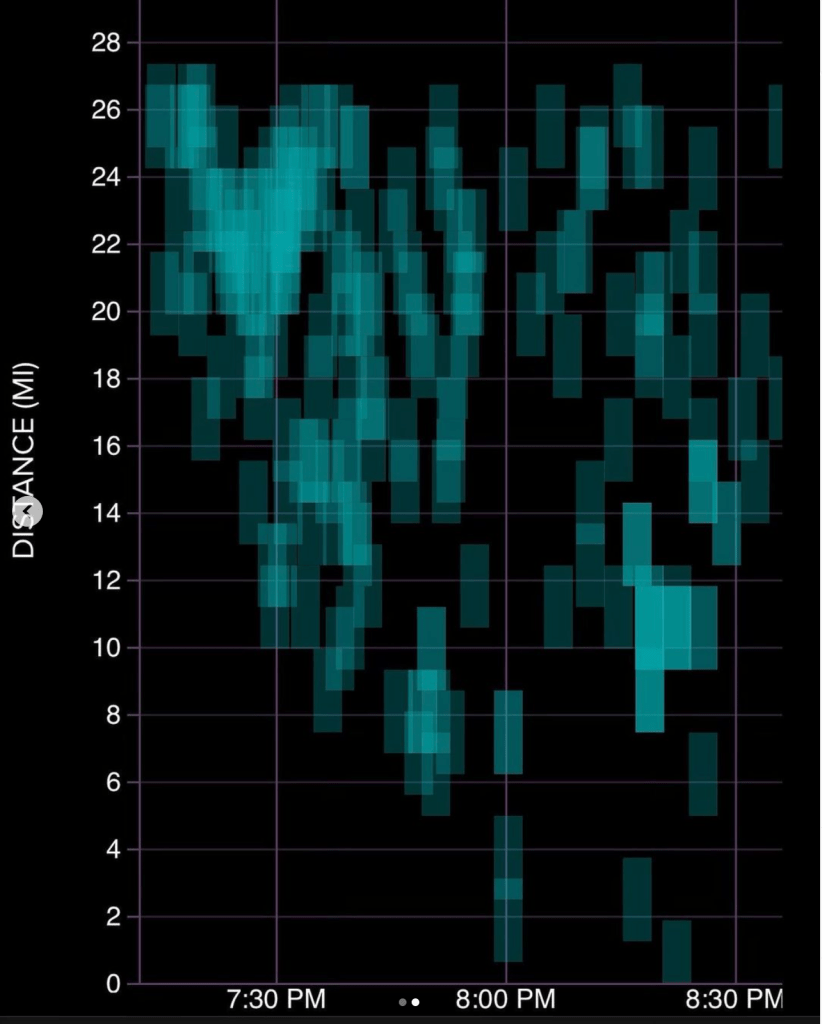
This image shows a depiction of the lightning detector output within the Tempest app. Output from the sensor almost always compared favorably with the lightning detection sensor output from the GOES-16 satellite.
Exploring the Tempest Weather Station
Temperature and humidity
From the start, we noticed that there was little difference in most of the information between the Davis Instruments Vantage Pro 2 and the Tempest. Temperatures were within a degree of each other almost all of the time. Relative humidity is generally about between two and four percent higher on the Tempest, but the Vantage Pro 2 has a fan to help with aspiration of the hygrometer, which could explain at least some of the difference.
Wind
The Vantage Pro 2 uses standard wind cups to measure wind speed and a wind vane to record wind direction. By contrast, the Tempest measures wind with no moving parts. It computes wind with electro-acoustic transducers that send sonic pulses back and forth, timing the pulses between the transducers to determine wind speed and direction. Due to significant siting issues, the wind equipment suffers from severe blockage, rendering the output essentially useless. However, when the wind comes from the south or north, wind speeds are higher and we have not been able to detect major differences between the platforms.
Barometer
We have noticed a consistent 0.01 inch difference the two platforms, with the Vantage Pro 2 consistently higher. While this well within tolerance for the pressure sensors, some of the difference might be explained by the fact that the pressure sensor for the Vantage Pro 2 is inside and the sensor for the Tempest sits outside with the sensor package.
Lightning
Of the additional sensors on the Tempest Weather Station (including the UV sensor), the lightning sensor was the one that captured my imagination. In my mind, stations equipped with this sensor seemed to be out of our price range, but here it was. Purportedly able to detect lightning from 25 miles away, I was eager to test this premise. Fortunately, we did not need to wait long, as April brought enough thunderstorms to validate the new instrument. To my mild surprise, the lightning detection performed beyond my expectations, as it was often backed by information from the GOES-16 lightning detection sensor. Of course, it is not perfect, and may tend to overreport lightning strikes at longer distances. Still, this sensor allows us to log storms at the station and begin a lightning climatology for the region.
Rain
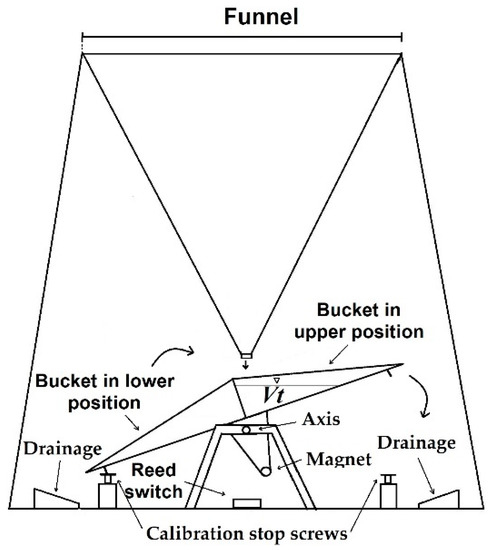
The Vantage Pro 2 reports rain using a tipping bucket system. Like most weather reporting systems, a tipping bucket system records rain by collecting rain in a “bucket”, dumping its contents every time 0.01 inches of rain is received. As the first bucket is emptied, a second bucket replaces its, tipping when the bucket fills. An electronic switch is activated each time the bucket tips, allowing the weather system to measure both accumulated rainfall and rainfall rate.
Though tipping buckets are used in almost all automated weather stations, it is not perfect. Studies have shown that during high rainfall rates (generally more than two inches/hour), the tipping bucket system has difficulty keeping up with the rainfall, often underreporting amounts during those periods. In addition, high winds can cause rain to blow over the entrance to the funnel, also resulting in underreported rainfall. Despite these limitations, its ease of use and ability to be used remotely makes tipping buckets the default method for measuring rainfall. For that reason, we consider the Vantage Pro 2 rainfall to be the standard against which the Tempest was tested.
Before purchasing the Tempest, we were well aware that the system had issues with reporting rainfall. Rather than using a tipping bucket, the Tempest measures rainfall by “detecting and quantifying rain using vibration signals – not weight or volume” (from the Tempest Weather Station documentation). Essentially it measures the force of impact of the raindrops hitting a sensor (which resides on the top of the station, referred to as haptics). Admittedly this approach has some shortcomings, but Tempest indicated that the system uses Artificial Intelligence (AI) to better estimate rainfall with time.
Acknowledging the shortcomings associated with haptics, the Tempest offers access to a NearCast Rain (NC Rain), which uses proprietary methods for incorporating other sensors (such as nearby rain gauges, radar estimates, etc) to augment the haptics method. Despite its reported shortcomings, I was looking forward to evaluating the rainfall reported by the Tempest Weather System.
Evaluating the Tempest Rainfall Output
While we have had Tempest Weather Systems in place in Toms River, NJ for nearly a year, automating rainfall retrieval for both the Vantage Pro 2 and the Tempest took some time, limiting the available dataset for analysis. For this evaluation, rainfall events from April 2023 through November 2023 were included for study. In order to be included in the evaluation, we only used daily rainfall amounts when it was available for both platforms. There were a number of days when rainfall was recorded by the Tempest and not the Vantage Pro 2, so those days were excluded (so that the database would be homogeneous). In total, 59 days during the eight month period were included in the analysis.
| Date Installed | Date Returned | |
| Station No. 1 | 12/13/2022 | 1/22/2023 |
| Station No. 2 | 1/15/2023 | 8/15/2023 |
| Station No. 3 | 8/13/2023 |
As mentioned earlier, there were three systems changes of the Tempest station between December 13th 2022 and August 13th 2023. The first changes did not affect the rainfall analysis, but the next two did impact the database. WeatherFlow documentation indicated that the the haptic rainfall estimates would improve with time due to AI included in the system software. Figure 1 appears to bear out this claim, as events in April showed a strong negative bias in the haptic rainfall amounts (compared to the Vantage 2 Pro amounts).
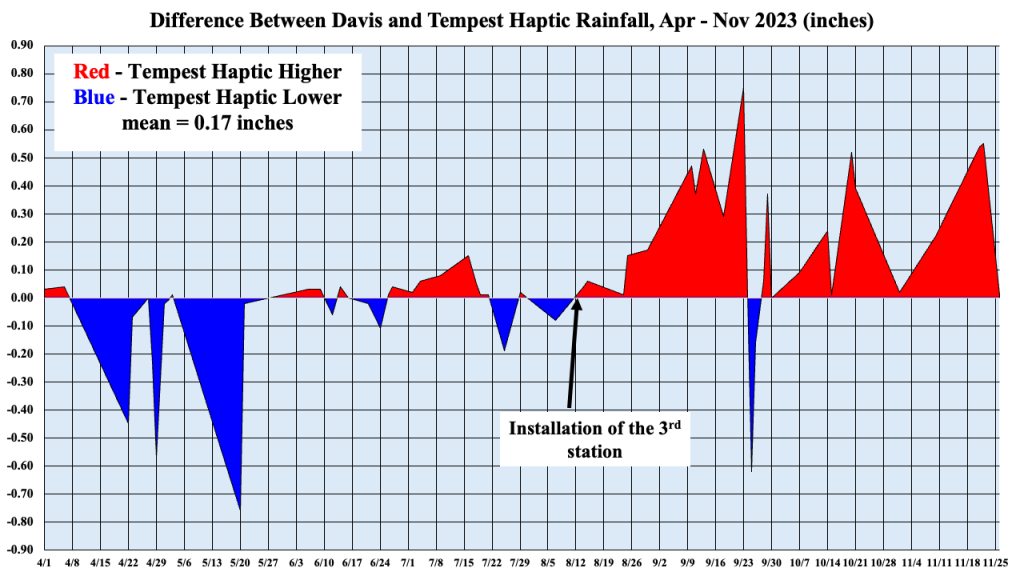
However, the Tempest haptic rainfall amounts improved markedly between May and July 2023, with much smaller differences noted. Following the installation of the 3rd station, a strongly positive bias was introduced, which continued through November 2023. The lone aberration occurred during the week of September 23rd-30th, 2023, when the Tempest haptic method vastly underreported rainfall. This was likely due to the fact that the rainfall was composed of smaller raindrops, which would have had less of an impact of the haptic sensor, causing it to count less raindrops and lower rainfall amounts. Tropical rainfall is typically comprised of many small raindrops, and because of this, National Weather Service (NWS) 88D radars have a special mode to account for the smaller drop size.
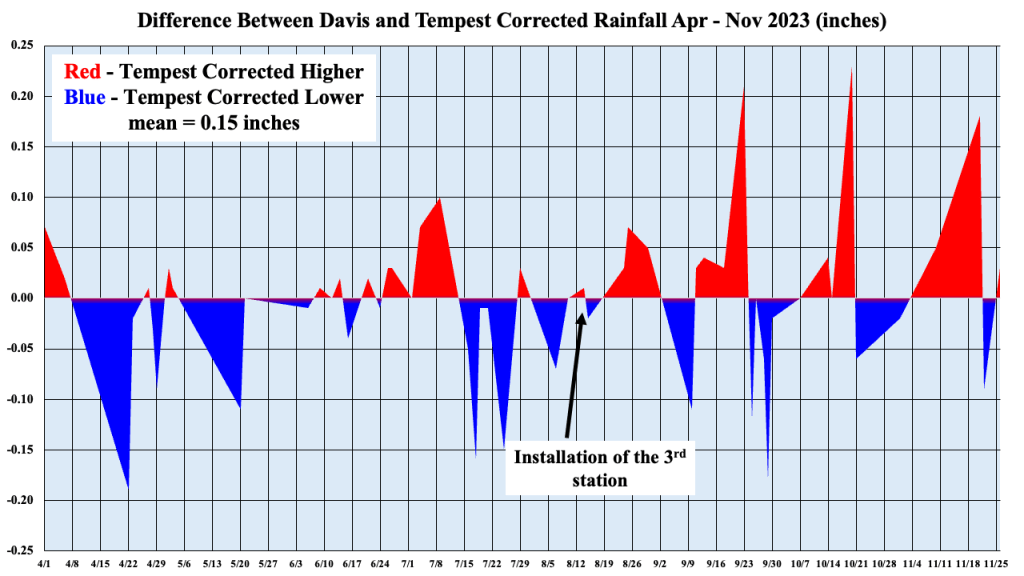
Differences between the Vantage Pro 2 rainfall and the Tempest Corrected rainfall followed the same basic pattern as the Tempest Haptic rainfall, though the differences were slightly larger. This is most evident during June and July 2023, as the peaks and valleys in the rainfall differences were seen. Peaks and valleys in the rainfall differences remained after the 3rd station was installed and continued through November. Though the overall mean value of the differences in rainfall amounts between the Vantage Pro 2 and the Tempest rainfall amounts were small, the Tempest Corrected rainfall amounts were slightly better, despite the peaks and valleys.
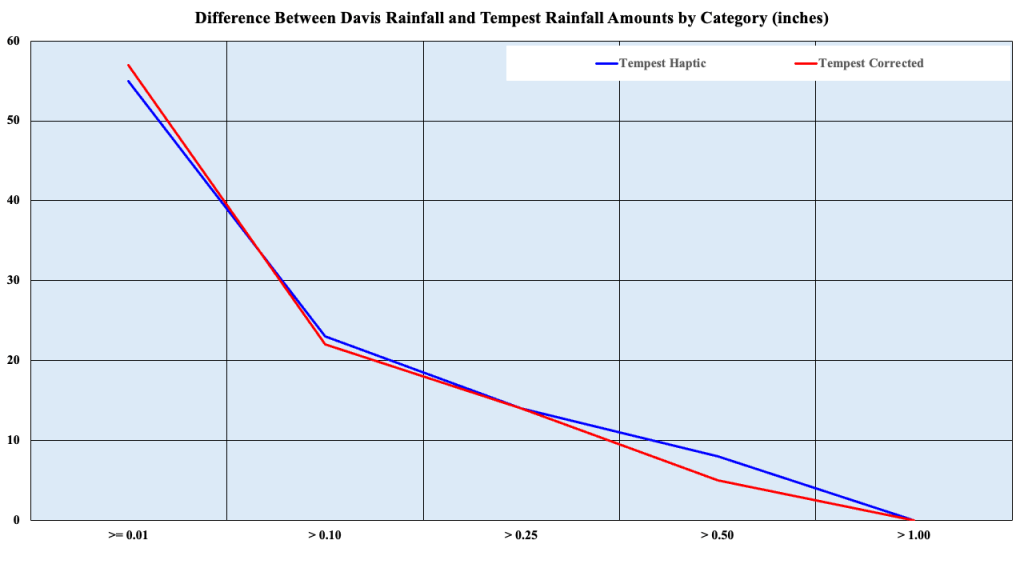
As might be expected, the two Tempest rainfall approaches yielded similar results when rainfall amounts differences were less than 0.50 inches. Differences greater than 0.50 inches showed the Tempest Haptic method struggled, suggesting the method tended to overestimate rainfall amounts during heavier rainfall events, while the Tempest Corrected approach showed more variability. Both paradigms struggled to consistently mirror the results of the Vantage 2 Pro, meaning that using either approach as a possible replacement for the Davis Instruments would be problematic, at best.
| Mean | RMS | |
| Davis – Tempest Haptic | 0.17 inches | 0.27 inches |
| Davis – Tempest Corrected | 0.15 inches | 0.24 inches |
Overall, the Tempest Corrected method of deriving rainfall is marginally better than the Tempest Haptic method, with the Tempest Haptic method showing a strong positive bias following the installation of the 3rd station. Neither method is a suitable replacement for the tipping bucket method employed by the Davis Instruments station. With respect to rainfall, the Tempest station is probably best used to determined the start time and end time of rainfall, though even this can be impacted by the limitations of the Tempest Haptic rainfall method.
Recommendation
The Tempest Weather Station is a solid remote weather system, comparing favorably with the much more seasoned Davis Instruments Vantage Pro 2 in most respects, especially with respect to temperature, relative humidity and pressure. Unavoidable siting problems made evaluating wind virtually impossible, though there is nothing to suggest that there would be a substantial difference between the two systems. The Tempest offers a lightning detection system which is much better than expected, considering the compactness and modest cost of the station.
Rainfall, however, is a much different story. Even during the best of conditions, both Tempest rainfall methods leave something to be desired when compared to the trusted Vantage 2 Pro system. Unless there is a reliable rainfall source nearby, the Tempest Weather System may disappoint weather enthusiasts with its rainfall estimates. At one time, my brother and I strongly considered using the Tempest as our primary system should the Vantage Pro 2 meet an early demise, but the rainfall discrepancies give me pause.
 NJ Weather Info
Leave a comment